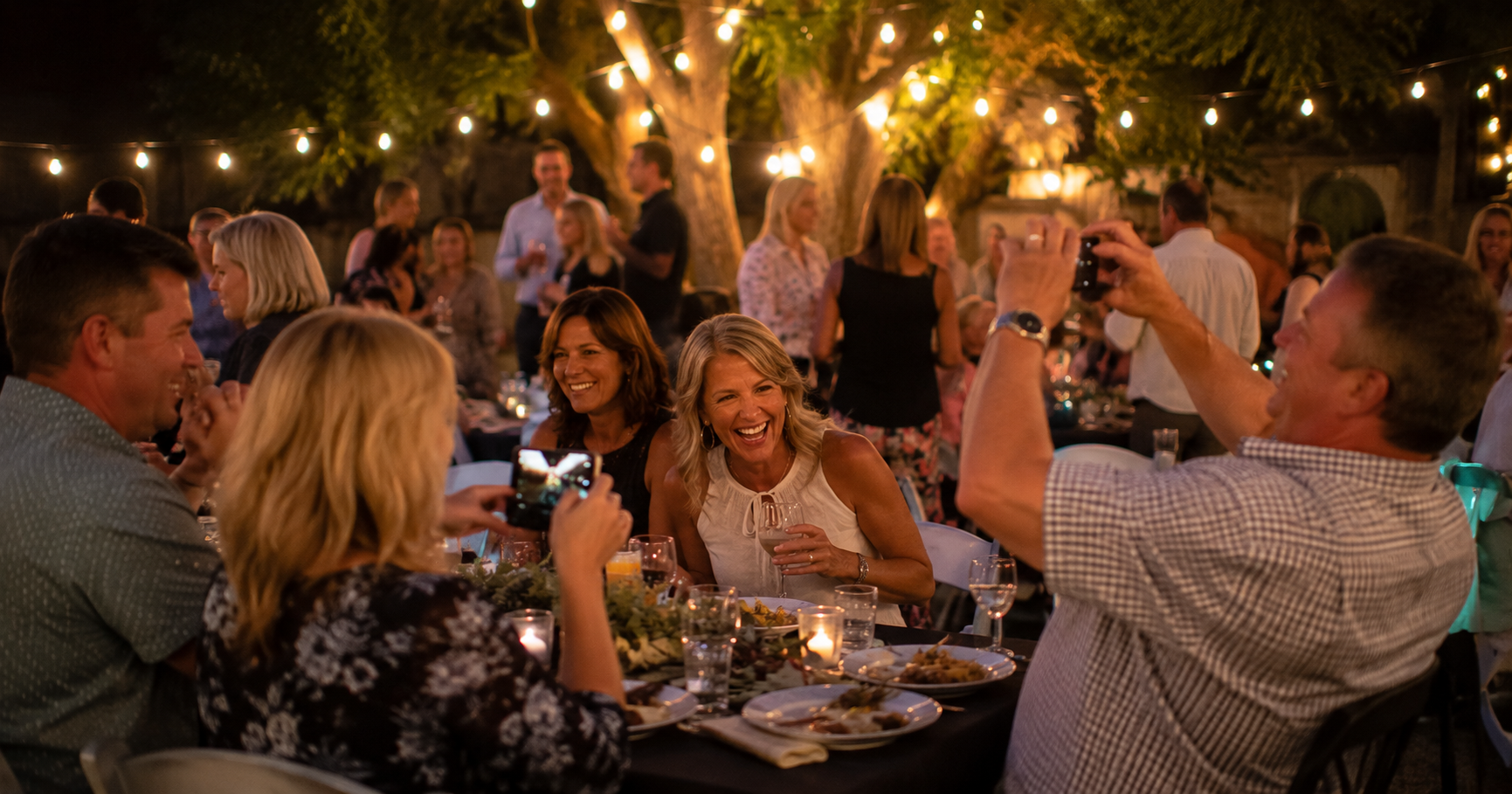
Most reunions follow the same basic script. Hotel ballroom or banquet hall. DJ. Buffet. Name tags. Open bar. People stand around in clusters and talk to the same three people they were already friends with, and by 10pm it's winding down.
That's not a bad reunion. But it's also not the one anyone's still talking about five years later.
The reunions people remember are the ones that did something a little different — a venue that felt right for the group, an activity that got people actually interacting, a detail that made it feel personal instead of generic.
Here's what works.
Venue Ideas Beyond the Hotel Ballroom
The bar or restaurant buyout. A private buyout of a local bar or restaurant is often cheaper than a hotel ballroom, more casual in feel, and easier to plan. You get built-in ambiance, a bar that's already staffed, and food that's already prepared. No catering coordination, no rental chairs. Tiffany Clinage chose Yard Bar in Panama City for the Mosley High School Class of 2006 reunion — a local venue with character that fit her class. The result: 126 tickets sold and a night her class is still talking about.
A rooftop. Most cities have rooftop venues available for private events. The open air, the view, and the setting do a lot of the atmospheric work for you. Especially strong for summer evening events.
A brewery or winery. Built-in activity (tastings), casual atmosphere, usually more affordable than traditional event spaces. Works especially well for smaller groups of 40-80 people.
The school itself. Some high schools will rent their gymnasium, cafeteria, or courtyard for reunion events — especially for milestone anniversaries. It's the most nostalgic possible setting and the one that tends to spark the most genuine conversation. Worth a call to the principal's office.
An outdoor pavilion or park. For casual reunions or larger groups, a public park pavilion rental is one of the most affordable options available. Add food trucks, lawn games, and a speaker system and you have a genuinely fun event for a fraction of the cost of a traditional venue.
A boat or cruise. For coastal or lake cities, a private boat charter creates an inherently social environment — nobody can drift to a corner and check their phone. More logistically complex but memorable.
Activity Ideas That Actually Get People Talking
The problem with most reunions is that there's nothing to do except stand around and talk to people. For some attendees this is fine. For many — especially the ones who weren't in the inner social circle in high school — it's the thing that makes them decide not to come.
Activities solve this. They give people something to do together, which takes pressure off the small talk and creates natural conversation starters.
Then and now photo displays. Set up a photo display with yearbook photos or old school photos alongside a current photo station where people take a matching photo tonight. Simple, nostalgic, gives everyone something to look at and talk about for the first 20 minutes.
Signature drinks named after teachers. Tiffany did this for her reunion and the engagement post asking classmates to submit teacher names was one of her highest-engagement posts of the entire campaign. People who submit names for the drinks feel ownership over the event before they even arrive.
A slideshow or memory reel. Compiled from old photos, videos, and yearbook content — playing on a screen throughout the night. Doesn't need to be professional. A thoughtful compilation on a laptop connected to a TV works fine.
Trivia night format. A round of "how well do you remember high school" trivia — school mascot history, local landmarks, pop culture from graduation year, teacher quotes — gets tables competing and laughing together. Works especially well for the first hour when energy needs building.
A class superlatives update. Take the original yearbook superlatives and run a current vote — "most likely to succeed then, most successful now." Announce the results during the event. Good for a laugh and a moment of recognition.
A photo booth. Still works. A photo booth with props related to the graduation year — newspaper headlines, pop culture references — gives people something fun to do and creates shareable content that promotes your reunion organically.
A tour of the school. If you can arrange a school visit earlier in the day, a walk through the old hallways before the main event is one of the most emotionally resonant experiences a reunion can offer. Tiffany's reunion included a school tour where the current principal met the class out front at 1pm. Details like that are what people remember.
Multi-Day Weekend Ideas
A single-night event is the most common format — and it works. But for milestone anniversaries and classes with strong bonds, a multi-day weekend creates a fundamentally different experience.
Friday: informal kickoff. A casual gathering the night before the main event — a bar, someone's backyard, a park. Lower pressure, people arrive when they can, it gets the awkward "oh wow you look exactly the same" conversations out of the way so the main event can be more relaxed.
Saturday: main event. The full production — venue, dinner, entertainment, the works.
Sunday: brunch or school tour. A casual morning wrap-up for whoever's still in town. Often the most genuine conversation happens here when the pressure of the main event is over.
Tiffany's Class of 2006 reunion ran three events over two days — an unofficial kickoff, a school tour, and the main event — and sold separate tickets to each. MyReunite's multi-event weekend structure lets organizers configure per-event ticket selection so guests can choose which events they attend and pay accordingly.
The Details That Make the Difference
The big decisions — venue, food, entertainment — matter. But the details are what people actually remember.
Name tags with yearbook photos. The most common complaint at any reunion is "I can't remember who anyone is." A name tag with the person's yearbook photo next to their current name solves this instantly and gets a laugh from everyone.
A memory book or guest sign-in. A printed booklet with everyone's contact info and a space to write a note, or a physical sign-in board people can leave messages on. Takes about an afternoon to put together and becomes a keepsake.
A sponsored bar tab. If you have local business sponsors, announce a complimentary bar tab while it lasts. The strategic timing of this reveal — when ticket sales need a boost or when you want to drive final purchases — is one of the most effective tactics a reunion organizer has. Tiffany held this announcement until six weeks before the event, when fence-sitters most needed a reason to commit.
A who's coming page. Give people a way to see who else is attending before they buy their ticket. The "will anyone I actually care about be there?" question is the single biggest barrier to fence-sitters buying. A public who's coming page answers it without anyone having to ask.
The reunion doesn't have to be elaborate to be great. It has to feel like it was made for your specific class — the right venue, the right details, and enough thought put into the experience that people feel it when they walk in.
For the full planning guide, our post on how to plan a high school class reunion covers the complete timeline from first meeting to event night. And when you're ready to start collecting RSVPs and building your who's coming page, MyReunite is free to set up.
Related posts: